Ongoing support and relationships that extend far beyond your time in a program.

We meet you where you are, and help you get to where you deserve to be.
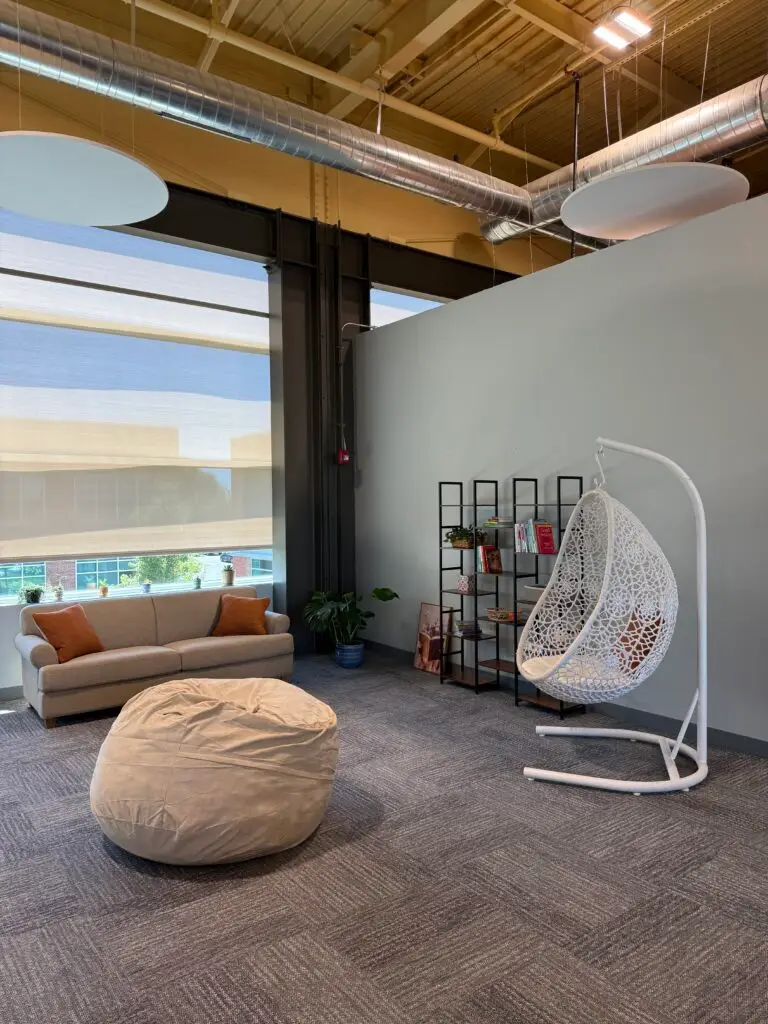

Finding the right level of care for your mental health can feel like an impossible puzzle. You know you need more support than weekly therapy provides, but inpatient treatment doesn't fit your life or your situation. Our mental health day program for women in Danvers, MA fills that gap—offering intensive, structured treatment during the day while allowing you to return home each evening to your family, your routines, and your life.
At Aurora for Women, our Full Day Program was designed for women who need meaningful, immersive support without stepping away from everything that matters to them. This isn't a holding pattern or a place to pass time between appointments. It's real treatment that creates real change, delivered in an environment built specifically for women by women who understand what healing actually requires.
Request a 100% confidential and secure callback from one of our caring team members to learn more about how we can help you find long-term healing at Aurora for Women.
Treatment at Aurora isn't about sitting in a circle reciting coping skills you'll forget by next week. It's about getting to the root of what's keeping you stuck—and building something sustainable from there.
A mental health day program, sometimes called a partial hospitalization program or PHP, provides intensive therapeutic support during daytime hours. You attend treatment much like you would a job—arriving in the morning, participating in various therapies and groups throughout the day, and returning home in the evening. This structure offers the intensity of inpatient care with the flexibility to maintain connection to your daily life.
Day treatment bridges the gap between traditional outpatient therapy and residential programs. For many women, weekly therapy sessions simply aren’t enough to address what they’re experiencing. When you’re struggling with severe anxiety, deep depression, unresolved trauma, or the weight of multiple challenges happening simultaneously, one hour per week can feel like trying to empty the ocean with a teaspoon. You need more time, more support, and more consistent care to gain real traction.
That’s exactly what our day program provides. Instead of isolated appointments scattered throughout your week, you receive concentrated therapeutic support that builds momentum. Each day connects to the next, allowing for deeper work and faster progress than traditional outpatient settings can offer.
Our Full Day Program runs Monday through Friday from 9:00 AM to 3:00 PM. This schedule provides six hours of daily therapeutic programming—enough time for meaningful work while still allowing you to be home for dinner, school pickups, or evening responsibilities.

A full day of structured support, connection, and care. You are held through every part of the day, with space to slow down, process, and begin to rebuild.
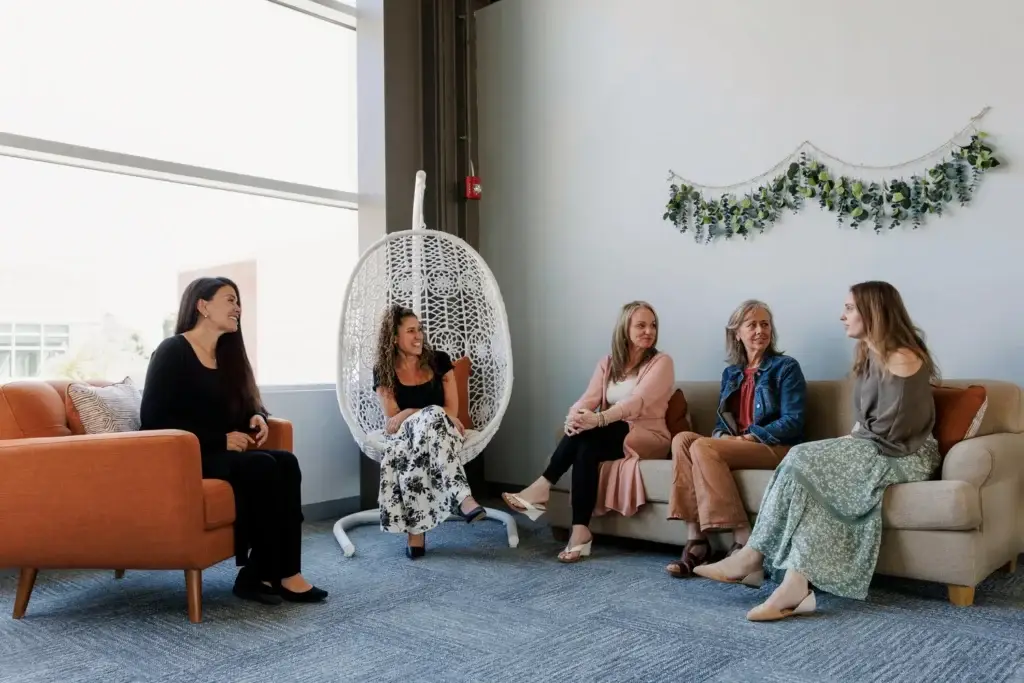
Start your day with support, clarity, and intention. A focused space to build skills, connect with others, and carry that steadiness into the rest of your day.

Support that fits into your life. Designed for women balancing work, family, or other responsibilities while staying connected to consistent care.
We know that life doesn't stop because you need mental health support. That's why we offer three levels of programming designed to provide meaningful treatment while respecting your real-world responsibilities.
When you arrive each morning, you’re stepping into a space designed to feel different from clinical environments you may have experienced before. The atmosphere is warm and intentional, created to help you feel safe enough to do vulnerable work.
Your day begins with a morning check-in, a space to arrive fully present and share where you’re at emotionally. This isn’t performative participation or forced sharing—it’s genuine connection with other women who understand what it means to carry heavy things. These check-ins set the tone for the day and help our clinical team understand what each woman needs as the hours unfold.
Group therapy forms the core of your daily experience, but these aren’t the groups you might be imagining from movies or past experiences. Our groups are small and intimate, facilitated by clinicians who bring both professional training and personal understanding into the room. Topics vary based on what participants are working through, but sessions often focus on processing emotions, understanding patterns, building coping skills, addressing trauma, improving relationships, and developing self-compassion.
The power of group therapy lies in connection. There’s something that shifts when you realize you’re not the only one who feels this way. When another woman shares something you’ve never spoken aloud but have felt deeply, something loosens. When you witness someone else’s breakthrough, it creates possibility for your own. This is healing through community, and it works in ways that individual therapy alone cannot replicate.
Individual therapy sessions happen throughout the week alongside your group work. This private time with your therapist allows you to go deeper into personal history, process what’s coming up in groups, and work on challenges specific to your situation. Your therapist remains consistent throughout your time with us, building the kind of relationship where real transformation happens.
Skill-building workshops teach practical tools you’ll actually use. We focus on strategies that work in real life—not theoretical concepts that sound good in a treatment room but fall apart when you’re overwhelmed, triggered, or exhausted. You’ll learn how to regulate your nervous system, challenge unhelpful thought patterns, set boundaries, communicate needs, and care for yourself in sustainable ways.
Lunch provides a break, but it’s also part of the healing. Sharing meals with other women, having casual conversations, laughing about something unrelated to treatment—these moments matter. They remind you that you’re a whole person, not just a collection of symptoms to be treated.
Afternoon programming continues the therapeutic work before closing with reflection and preparation for your evening. We don’t send you home without grounding. You’ll leave with awareness of what came up during the day and tools to navigate your evening, ready to return tomorrow and continue building on your progress.
Designed by women who truly understand the lived experience behind healing.
A deeper approach that focuses on understanding, not just managing symptoms.
A space grounded in connection, where women feel supported every step of the way.
Ongoing support and relationships that extend far beyond your time in a program.
We guide our clients through every phase of treatment to ensure a seamless continuation of care.
Our mental health day program serves women facing a range of challenges that have become too significant to manage with less intensive support. You might benefit from this level of care if you’re experiencing severe or persistent symptoms that interfere with daily functioning, if previous outpatient therapy hasn’t created the change you need, if you’re stepping down from a higher level of care and need continued structure, or if you recognize that you need dedicated time and space to focus on healing.
When anxiety stops being occasional worry and becomes a constant presence—when panic attacks disrupt your days, when avoidance has shrunk your world, when you can’t remember the last time you felt calm—day treatment provides the intensive support needed to reclaim your life. Our program helps you understand what drives your anxiety, regulate your nervous system, and gradually face what you’ve been avoiding in a supported environment.
Depression lies to you. It tells you nothing will help, that you’re beyond repair, that there’s no point in trying. Our day program provides consistent structure and support that can break through depression’s grip when motivation has disappeared entirely. You don’t need to feel ready or hopeful to start—you just need to show up. We’ll meet you where you are and help you find your way back to yourself.
Trauma doesn’t stay in the past. It lives in your body, your relationships, your reactions to things that shouldn’t feel threatening. Our trauma-informed approach recognizes that healing from PTSD requires safety, time, and specialized care. The day program structure provides enough intensity to process traumatic experiences while allowing you to practice integrating that healing into your daily life.
Becoming a mother changes everything, and sometimes that change includes depression, anxiety, intrusive thoughts, or a loss of identity that no one warned you about. Our program understands the unique challenges of postpartum mental health and provides support without judgment. You’re not a bad mother for struggling—you’re a human being navigating one of life’s most significant transitions.
Divorce. Job loss. Children leaving home. Caring for aging parents. Relocating. Major life transitions can trigger mental health challenges even in people who have never struggled before. When the ground shifts beneath you, day treatment offers stability and support while you find your footing in a new reality.
Grief doesn’t follow a timeline, and it doesn’t limit itself to death. You might be grieving a relationship, a version of yourself, a future you expected, or a loss that others don’t recognize as significant. Our program provides space to process grief fully rather than rushing toward an artificial endpoint of “moving on.”
Women are taught to keep giving until there’s nothing left, then criticized for having nothing left. If you’ve been running on empty for so long that you’ve forgotten what full feels like, day treatment can help you stop, recover, and rebuild a life that doesn’t require constant self-sacrifice.
Mental health challenges and substance use often develop together—you might have started drinking to manage anxiety, or depression might have deepened alongside increased substance use. Our integrated approach addresses both issues simultaneously because treating one while ignoring the other rarely creates lasting recovery.
We work with most major insurance carriers to help ease the costs associated with seeking help at our programs. We’ll walk you through your benefits so you can move forward with clarity and confidence.
You might be reading this after trying treatment that didn’t work. Maybe you attended a program that felt impersonal, where you were processed through a system rather than truly seen. Maybe you received a treatment plan that could have belonged to anyone, with no recognition of your specific history and needs. Maybe you left feeling like something was still unresolved, still unaddressed, still waiting.
Aurora exists because our founders experienced that same gap—not as patients, but as clinicians working inside treatment systems that weren’t serving women well. They saw women doing everything right and still leaving incomplete. They understood that the problem wasn’t the women. It was the model. So they built something different.
From your first day with us, we’re learning who you are—not just your diagnosis, but your story. What relationships shape your life? What have you been carrying that no one has asked about? What do you actually need, not what does a textbook say someone with your diagnosis needs? Your treatment plan is built around your specific situation because that’s the only way real healing happens.
Our team brings impressive clinical credentials into every interaction, but that’s not all they bring. Many of our staff understand mental health challenges personally, not just professionally. This combination creates something you can feel—a lack of judgment, an authenticity in connection, a sense that the people supporting you actually understand what it feels like to struggle.
Being 100% women-owned and operated isn’t something we mention for marketing purposes. It fundamentally changes the environment and the experience. There are conversations that happen more easily among women. There are experiences that don’t require explanation. There are layers of understanding that exist because every person in the building—from leadership to clinical staff to the women in treatment—shares certain realities of moving through the world as a woman. This creates safety and connection that mixed-gender environments simply cannot replicate.
You will never feel lost or confused about what’s happening at Aurora. From your first phone call through discharge and beyond, we communicate clearly about what to expect, what comes next, and how decisions are made about your care. Trust is built through honesty, and we refuse to leave you guessing about your own treatment.
One of the greatest failures of traditional treatment is the sudden ending—weeks of intensive support followed by an abrupt return to regular life without the community you’ve built. At Aurora, we don’t believe healing works that way. Your connection to this community continues after your program ends because recovery is ongoing and support should be too.
If you’ve read this far, something here resonated with you. Maybe you recognized yourself in the descriptions of anxiety, depression, or burnout. Maybe you felt hope that treatment could actually be different this time. Maybe you’re tired of struggling alone and ready to accept support.
Whatever brought you here, we want you to know that reaching out is not weakness. It’s the beginning of something new. You don’t need to have everything figured out before you call. You don’t need to be in crisis to deserve help. You just need to take one step—and we’ll walk alongside you from there.
Contact Aurora for Women today to learn whether our Full Day Program is right for you. We’ll answer your questions honestly, explain the admissions process clearly, and help you understand what to expect. No pressure, no judgment—just real conversation about what you need and how we can help.
Length of treatment varies based on individual needs, but most women participate in our Full Day Program for several weeks. We don't believe in arbitrary timelines—your treatment continues until you've made meaningful progress and feel prepared to transition to less intensive support. We'll discuss expected length of stay during your assessment and adjust as needed based on how your treatment unfolds.
We encourage you to bring anything that helps you feel comfortable—a water bottle, a journal, comfortable layers since temperature preferences vary. We provide lunch and any materials needed for programming. You don't need to bring anything special or prepare in any particular way. Just bring yourself.
Our groups maintain consistency to build the trust and connection that makes therapy effective. While the specific women in your cohort may shift as people begin and complete treatment, you'll have continuity with your primary group and your individual therapist throughout your time with us.
Many women in our program have children and caregiving responsibilities. Our 9 AM to 3 PM schedule is designed to work with school hours when possible. We understand that women often carry significant responsibilities outside of treatment, and we work with you to make participation feasible.
We work with many insurance plans and will verify your benefits before you begin treatment so you understand any financial responsibility. Our team handles insurance communication so you can focus on your healing rather than navigating complicated systems.
Traditional outpatient therapy typically involves one session per week for about an hour. Our day program provides approximately 30 hours of therapeutic programming weekly—a significantly more intensive experience that creates faster progress for women who need more support than weekly sessions provide. The consistency and immersion allow for deeper work than isolated appointments can achieve.
Most women transition from our Full Day Program to one of our half-day programs, stepping down to less intensive support while maintaining connection with our community. We work with you to create a sustainable plan for ongoing care, which might include continued programming at Aurora, connection to outpatient resources, or other supports tailored to your needs.
This concern is incredibly common, and we want you to know that you're never forced to share before you're ready. Our groups are facilitated by skilled clinicians who create safety and allow participation to unfold naturally. Many women who initially felt terrified of group therapy come to find it the most valuable part of their treatment. There's something powerful about healing in community that individual therapy alone cannot provide.
If weekly therapy hasn't been enough to create the change you need, if your symptoms are significantly interfering with daily functioning, if you're struggling to maintain stability between appointments, or if you recognize you need more intensive support to get better—day treatment may be the right level of care. Our admissions team can help you determine the appropriate level during your initial consultation.